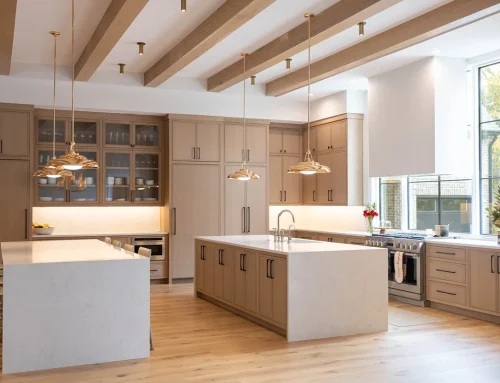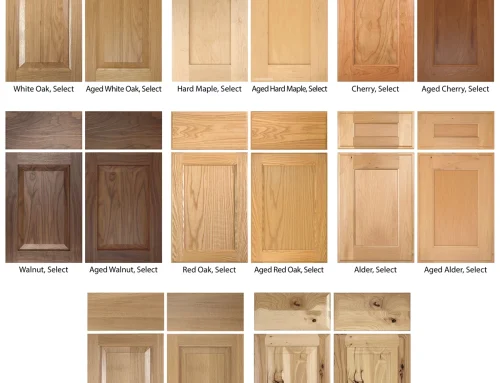

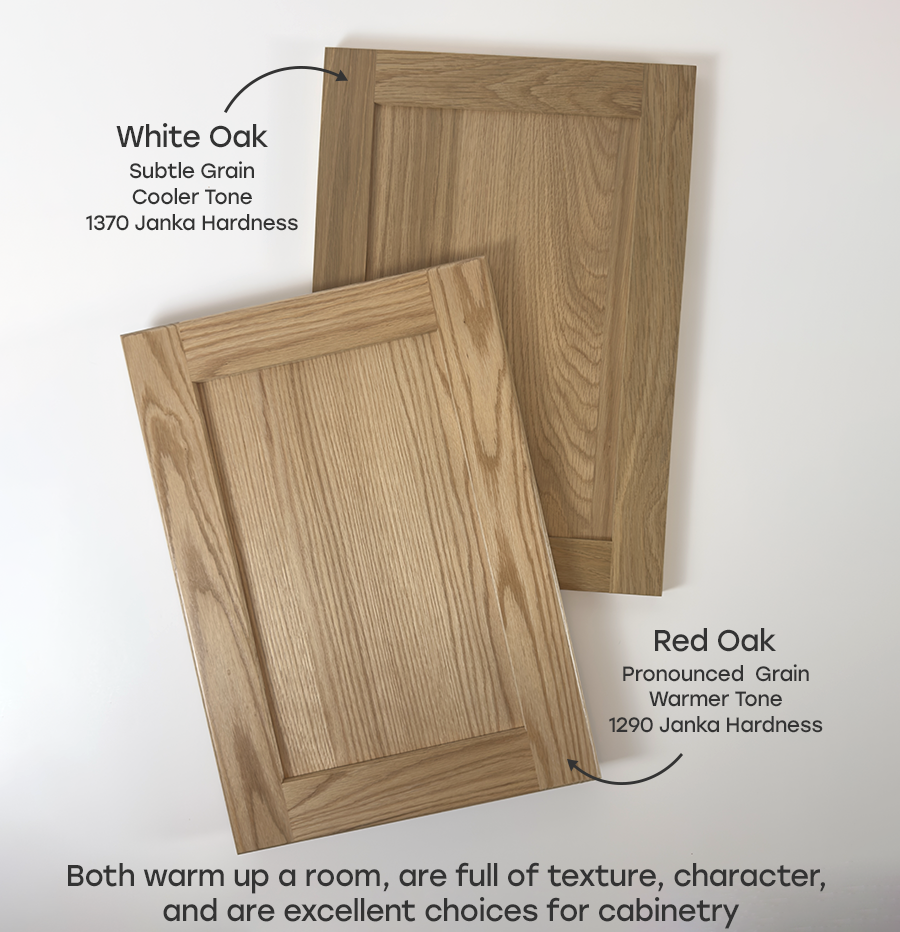
Natural wood has made a full comeback in interior design, and white oak and red oak are leading the way. White oak is harder, at 1370 on the Janka hardness scale, than red oak which sits at 1290 hardness (the higher the number the harder and more dent resistant the material).
There are also distinct differences in color, grain, porosity, density and the way they accept stain.
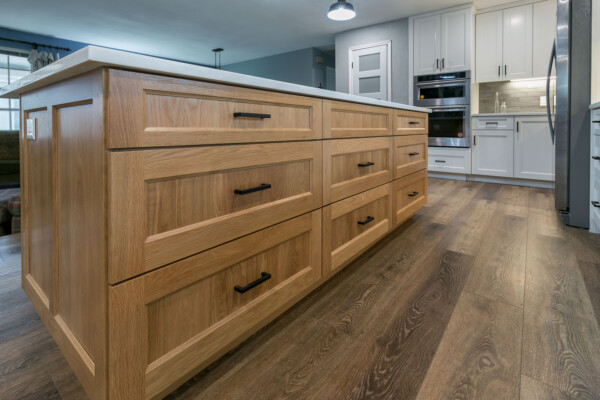
Shown above: White oak kitchen island with flat panel drawer fronts with vertical panel grain, wide stiles and rails and IE4 inside edge
Red oak is predominantly pinkish to reddish brown heartwood and white to light brown sapwood, with a strong grain pattern and occasional mineral streaks, small, sound knots, and wormholes. Red Oak is a heavy, hard wood and is generally receptive to a variety of stains and finishes.
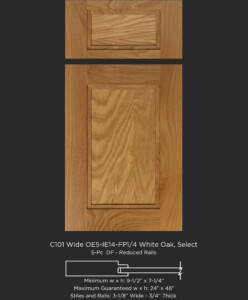
White oak is light tan in color, somewhat more figured than Red Oak due to longer rays, and generally receptive to a variety of stains and finishes. White Oak may contain a minimal amount of mineral streaks, small, sound knots, and occasional wormholes. It is a time-tested hardwood known for its durability, water resistance and versatility.
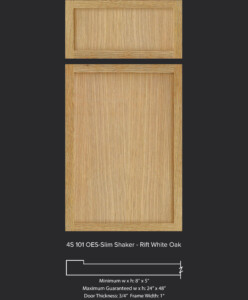
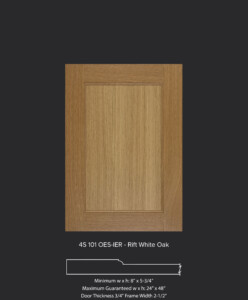
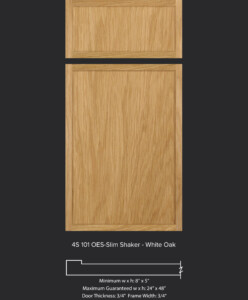
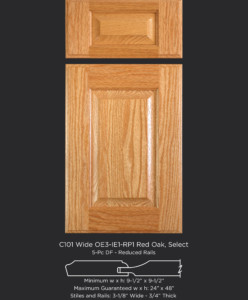
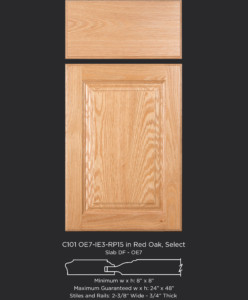
Rift white oak material is cut with the grain oriented at a 30 to 60 degree angle to the board’s face. This cut gives each piece a straight-grain appearance with possible medullary rays, although typically few or none as opposed to quarter sawn white oak which typically has an abundance of medullary rays.
View detailed information on our red oak, white oak and rift white oak material specs on our Materials page.
Both red oak and white oak warm up a room, are full of texture and character and are excellent choices for cabinetry. They’re both available in a variety of door styles from TaylorCraft cabinet door company.
View red oak and white oak cabinet door photos on our cabinet doors page
Serving the Finest Wood-Craftsmen (TM)